



There is no shortage of challenges when working with DAS. The resistance that can arise is nothing unusual or specific to this method – it reflects well-known human patterns of response to change. Thanks to 1,200 reflections from around a hundred participants in my practitioner training programme in DAS, we also have a solid understanding of what those challenges are and when in the process they tend to appear. In our work so far, we have identified around thirty recurring challenges, falling mainly into four broad areas: time and workload, the method’s complexity for study leaders, psychological factors for participants, and organisational and cultural conditions. This chapter walks through them so that you are not caught entirely off guard when the challenges and resistance arrive. The focus here is less on how to handle them – that is covered in other chapters.
Many of the challenges in DAS studies reflect people’s hesitation in the face of the new, their attachment to the familiar rhythms of everyday life, and a natural discomfort with having to put their thoughts and feelings into words more openly. When purpose, roles, or expectations feel unclear, resistance grows – as it also does when digital data collection is misread as surveillance or evaluation. Often it is less about the method itself and more about the fact that something new and unfamiliar is making demands on time and attention, and in doing so, disrupting the daily flow. The important thing to remember is that these reactions are normal and expected. They are not signs that something has gone wrong. When participants genuinely understand the purpose, see the power of DAS, and experience for themselves the value of working in research-informed ways, the resistance tends to fade and is replaced by enthusiasm.
Many of the challenges are rooted in the practicalities of everyday life. Time pressure makes it hard to establish the rhythm that DAS needs, while the method’s various components can feel unfamiliar and complex at first. Many study leaders struggle to formulate good action tasks and tags, many participants feel uncertain about sharing feelings and reflections in writing. It is not uncommon for colleagues to express scepticism, or for the purpose to seem unclear – especially when roles and mandates have not yet been established. Concerns about data collection, ethics, and a sense of being monitored are another source of friction. DAS also tends to challenge organisations at their weakest point: the capacity to analyse their own learning in a systematic way. Add to that the persistence required to keep the momentum going over time, and what emerges is a picture of a way of working that both challenges and develops an organisation’s ability to learn.
8.1 A Model with Eight Challenges
Figure 8.1 summarises eight recurring challenges that we have seen time and again when DAS is introduced to new participants. Together they form a model that captures the breadth of the obstacles people encounter – from individual feelings to organisational structures, from the technical details of the method to the entrenched cultures of academia. That something is listed as a challenge does not necessarily mean it has been a problem in practice – it may also reflect participants’ anxiety about potentially running into such problems. We often hear that DAS is received better than people expected once they actually get a study going with their colleagues or other participants.
The model in Figure 8.1 is described in more detail in a research article I presented at a conference in Germany in June 2025 – see the reference below. The three challenge types on the left of the model relate primarily to practitioners: organisational and psychological challenges and difficulties connected to working in research-informed
ways within ordinary organisations. In the middle of the model are challenges that all participants describe, regardless of whether they are practitioners or researchers. These include the difficulty of keeping up with a DAS training programme while everyday life rolls on, implementing DAS in a pressured working environment, and concerns about achieving sufficient quality in participants’ reflections. On the right in the model are challenges raised primarily by participants in higher education institutions. These can involve conservatism, tall-poppy dynamics, career concerns and resistance from colleagues who prefer more traditional research methods. Some academics also raise deeper challenges connected to classic philosophical questions of epistemology and ontology.
Together, these eight challenge types provide a realistic map of the terrain that participants move through when they begin working with DAS. In the rest of this chapter, we use the model as a compass and work through participants’ reflections on each area. The challenges are presented concisely, without addressing how they can be handled – that is covered in other chapters of this handbook.
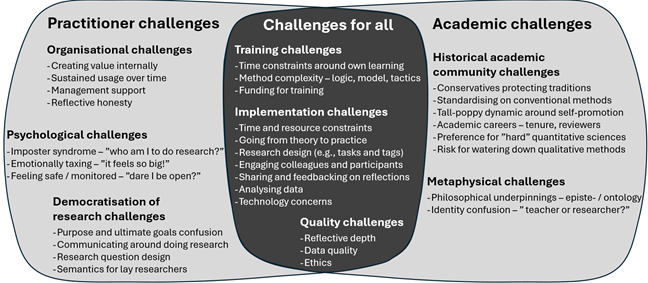
Figure 8.1. A model with eight challenges in DAS. (Lackéus, 2025).
Read more:
Lackéus, M. (2025). “I have All the Feelings”: Navigating the Emotional and Practical Challenges of Research Method Innovation in EE ECSB 3E, May 20-22, Munich.
8.2 Organisational Challenges – Creating Sustainable Value, Management Support, and Honesty
Participants’ reflections from previous practitioner training programmes show that the first organisational challenge is about creating value internally. Many express uncertainty about whether colleagues will appreciate or even understand the benefits of DAS. Several describe their organisation as “not particularly open to change”, as prone to “getting stuck in old routines”, and say that it therefore takes both courage and pedagogical sensitivity to show why DAS actually helps people in their everyday work. It is not the value itself that is missing – it is the ability to help others see it.
The second challenge concerns sustainable use over time. Reflections from both Swedish and international participants describe how the pace of everyday life makes continuity difficult. Action tasks are forgotten, the rhythm slackens, analysis meetings are cancelled. Time pressure and workload appear here not as individual problems but as structural barriers to persistence.
The third organisational challenge is management support. Several participants write that success depends on managers who “give legitimacy”, protect time, and show genuine interest in the results. Without this, DAS risks “falling through the cracks” or becoming a side project that participants drive on their own.
Finally, participants highlight the importance of honest reflection. Many write that genuine reflection requires psychological safety, clear boundaries, and a culture where feelings are not misread as criticism. When that safety is absent, reflections become cautious and uninteresting. When it is present, both learning and courage grow.
8.3 Psychological Challenges – Impostor Feelings, Emotional Weight, and Safety
A clear psychological pattern emerges from participants’ reflections. Many wrestle with a sense that they do not quite have the “right” to do research. This form of impostor syndrome – feeling like a fraud or a pretender – surfaces in comments such as “who am I to be doing this?”, “I feel like a complete beginner”, and “what if I get it wrong?”. The feeling intensifies when formulating action tasks, interpreting data, or giving feedback – moments traditionally associated with expertise rather than everyday practice. Several describe this as both exciting and frightening at the same time.
The next psychological challenge is that the work feels emotionally demanding. Participants write that it “feels big”, that exposing their thoughts makes them nervous, and that it can be unsettling to see their own feelings and failures in written form. The reflections show that learning is deeply connected to vulnerability – and that it is precisely this vulnerability that makes DAS developmental, but also challenging.
The third psychological challenge is about safety. Many ask themselves: “do I dare to be open?” Fear of being judged, misunderstood, or “found out” causes some people to hold back at first. Where safety is established – through a warm tone in feedback, clear boundaries, and a purpose that feels meaningful – the courage to write more honestly grows. Participants describe how this step often becomes the turning point. When safety is in place, the real learning begins.
8.4 Democratisation Challenges – Studying Your Own Practice Without Being a Researcher
When research moves out of academia and into everyday practice, established reference points for what “research” actually means in this context are often absent. Many participants therefore experience an initial confusion about the purpose and goals of DAS. Several write that they “don’t know what is expected”, that they find it hard to tell whether the focus is on their own development, collegial learning, or producing research findings. This uncertainty slows things down and leads some to wait until the picture becomes clearer.
A second challenge concerns the language around working in research-informed ways. Many participants express that the language of research feels unfamiliar – terms like research question, data quality, empirical material, and scientific method feel academically loaded. This creates a sense of distance: “is this really for me?” At the same time, the reflections show how liberating it becomes when that language is demystified and a more accessible vocabulary for everyday inquiry is established. That is when the door to working in research-informed ways truly opens. Many appreciate the idea of using their own terms for when practitioners work in this way – speaking of studying your own practice, formulating an inquiry question, and being part of an everyday inquiry group creates engagement and a sense of pride.
Finally, several participants describe difficulties in formulating inquiry questions and designing their own everyday inquiry. They wonder what is “the right scope”, how to choose a relevant focus, and what a question needs to look like in order to be empirically testable. This is not a sign of limited ability – it is a sign that the role of the inquiring practitioner is still being claimed. Taken together: when support is clear and language is accessible, the step from “the person who does the work” to “the person who studies the work” becomes considerably smaller. This aligns with a vision we set out early in developing DAS as a methodology – we talked about phrases like “research for everyone”, “people’s science” and working in ways that are genuinely accessible to all.
8.5 Training Challenges – Time, Methodological Complexity and Funding
Many participants describe how the first major challenge is a lack of time for their own learning. In both Swedish and international reflections, the comment recurs that the practitioner training moves too quickly, that they “haven’t had time to read the book”, or that they need more time to truly understand and try out the different elements in practice. They write that it is hard to set aside the mental and organisational energy needed to learn an entirely new method while everyday life continues at full speed. This creates a feeling of inadequacy, despite high motivation. These challenges prompted a complete redesign of the practitioner training into the form now available at Everydayinstitute.se, and a fairly substantial shortening of the book from 260 to 160 pages. But some of these challenges will probably persist regardless.
The second training challenge concerns methodological complexity. Participants express that the logic of the model – how action tasks, tags, feelings, commenting and analysis fit together – is more extensive than they first expected. Several describe difficulties in “getting the whole picture”, understanding the thinking behind good action task design, or grasping the analysis steps as a whole. Beginners find the method “overwhelming” until they have seen it work in practice. This may be less because DAS is inherently complicated and more because there are so many new components to master at once.
The third training challenge relates to funding and organisational support for the practitioner training in DAS. Several participants express concern about how long-term learning will be prioritised financially – whether their unit will be able to allocate resources for training everyone who needs it, whether colleagues will get the same opportunity to participate, and how the work can be scaled up without breaking the budget. The reflections show that this uncertainty affects motivation: when funding and time are secured, participants feel able to invest fully in their own learning. This was also a major reason why we set up Everyday Institute and developed a way of delivering practitioner training and a handbook free of charge.
8.6 Implementation Challenges – Practical Barriers, Technology, and Human Friction
In their reflections, participants describe how limited resources and time often become the first obstacle when implementing DAS. Several say they “want to do more than they have time for”, that action tasks end up squeezed between other responsibilities, and that they have to choose between commenting on reflections and keeping up with their everyday tasks or management work. Lack of time also means that many hold off on introducing the method to colleagues until they feel more confident themselves.
The next obstacle is the move from theory to practice. Participants write that DAS feels clear when someone else explains it, but becomes vague when they themselves have to “get the first loop going”. The transition from understanding to doing is a delicate phase where many ask for support, examples, and collegial reassurance.
A third cluster of challenges relates to research design – creating good action tasks, formulating a manageable number of tags, and choosing a pace that suits the organisation. Many describe this as the most technically demanding step.
Then there are the difficulties of engaging colleagues and participants. Some encounter scepticism, others face anxiety about openness or uncertainty about the workload. Once the work is under way, challenges arise in sharing and giving feedback – particularly with large groups. Participants describe the pressure of commenting quickly, genuinely and without losing quality. At the same time, many find the data analysis overwhelming at first: how to read heat maps, cluster quotes, and make sense of patterns.
Finally, several participants mention technical problems as an unexpected but real obstacle. Login difficulties, uncertainty about features in the IT support Loopme, and concerns about data protection. These issues are rarely serious in themselves, but they can disrupt momentum if support is not immediately available.
8.7 Quality Challenges – Data Quality, Ethics, Trust
Participants’ reflections show that the first quality challenge is depth of reflection. Many describe how hard it can be to find the right level of writing. Not too short and superficial, but not so extensive that the threshold becomes too high. Some write that they “rush through” reflections when time is short, others struggle to articulate why something turned out the way it did. This creates variation in the material – from deeply self-reflective texts to more descriptive accounts of what happened. Participants often express a wish for more examples of “good reflections” to help them calibrate.
The second quality challenge concerns data quality more broadly. Tags are applied with varying consistency, feeling ratings are interpreted differently by different people, and the wording of action tasks affects what actually shows up in the data. Some describe concern about missing important nuances, others feel that the tags are “too broad” or “too narrow”. In the early stages, many find that the data feels scattered before patterns begin to emerge.
Finally, several participants express a strong awareness of the ethical dimensions of the work. They ask themselves how open they can be, how feelings and vulnerability should be handled, and how reflections may be used further down the line. There is also concern that data could be misinterpreted or experienced as a form of control. Participants therefore highlight the need for clear boundaries: voluntariness, transparency and care as the cornerstones of good quality.
8.8 Academic Challenges – Traditions, Status Hierarchies and Methodological Norms
In several reflections from participants in academic positions, a sense emerges that DAS collides with a conservative tradition in higher education. Methods that are new, iterative and grounded in everyday practice are sometimes perceived as less “serious” than established approaches. Participants describe colleagues who “stick to what they have always done” and institutions where change happens slowly.
A second challenge is that many academic environments are shaped by standardisation towards conventional methods. Peer review systems, doctoral training and journal requirements tend to push towards familiar formats such as surveys, interviews or experiments. Several participants express concern about how DAS will be “received by reviewers” and whether it will be seen as legitimate.
There is also a cultural dimension: a tall-poppy dynamic around self-promotion. In their reflections, participants describe a fear of standing out, of driving their own methodological development, or of presenting something “too new”. Being associated with an innovative method can feel risky. Many also point to academic career logics. Qualifying for positions typically requires publications in traditional journals, which makes methodological innovation a professional risk.
DAS also challenges a longstanding preference for quantitative science. Participants describe colleagues who primarily value numbers, while qualitative data – feelings, stories, processes – is seen as too soft. Finally, several express concern that qualitative methods risk being diluted when made accessible to more people. At the same time, this is described as a necessary price for democratising research methodology and bringing it closer to practice.
8.9 Metaphysical Challenges – The Foundations of Research and Academic Self-Image
Metaphysical challenges concern the deeper questions about the nature of research – what counts as knowledge (epistemology), how reality can be understood (ontology), and what identity one actually holds as a researcher. Many participants express uncertainty about how a method built on feelings, micro-situations and real-time learning should be understood in relation to traditional scientific ideals. Questions surface in the reflections such as: “is this knowledge in an academic sense?”, “how should I relate to subjectivity?”, and “is it possible to draw conclusions without distance and control?” Several researchers describe how DAS unsettles their established assumptions about what data is, what evidence can consist of, and how causality can be understood when both action and feeling are included in the analysis. This methodological shift creates a kind of existential methodological discomfort – a feeling that the ground is not quite solid.
The second metaphysical challenge concerns researcher identity. In reflections from academics, a clear uncertainty emerges: “is this still research?”, “how will my colleagues see me if I use this?”, “does this risk undermining my professionalism?” DAS blurs traditional boundaries between researcher and practitioner, between detached analysis and participatory co-production. For researchers trained in objectivity and methodological rigour, this can feel like an intrusion into their disciplinary self-image. At the same time, some describe a genuine attraction to working in close relation to lived practice for the first time – alongside a fear of how this positions them within their institutional cultures.
In summary, researchers’ reflections show that the metaphysical challenges are not technical but identity-based. They are about the fact that DAS requires a new understanding of what research can be and who a researcher is allowed to be. It is precisely at this intersection of practice and theory that much of the academic friction arises – and where the potential for methodological renewal also lies.
8.10 Where It Chafes, There Lies Opportunity – Challenges as a Welcome Sign
When we look at the eight challenge types together, it becomes clear that resistance is not a sign that something has gone wrong. It is a sign that something important is in motion. Friction arises whenever people try new ways of working – especially those that touch habits, feelings and relationships. That DAS sometimes chafes is therefore not only a problem. It is also a signal that everyday life is beginning to change.
It is important to normalise this resistance. Much of what initially feels like worry or hesitation turns out, on reflection, to be entirely natural steps in the process. Something interesting often happens after the first period. When purpose, rhythm and safety fall into place, resistance is replaced by a kind of momentum. Participants describe how they suddenly see the value, feel more courageous, and notice that the work is beginning to bear fruit. I often hear this after an analysis meeting: “Why didn’t you tell us this was the point?” Well, I think to myself, you wouldn’t have understood even if I had tried to explain it. Some things have to be experienced in the body before they can be appreciated at depth – just as I described in section 5.1. Perhaps the most hopeful thing in all the material is precisely this: that DAS so often works better than people first expect. A method that never generated friction would probably not produce any deep learning effect either. DAS makes a difference precisely because it goes deep – close to people’s real work and real feelings. The challenges that arise are therefore not obstacles to be avoided. They are signposts. Small markers that show where learning, development and cultural change are most possible.