


Why should we study our own work? We’re already stretched thin. The schedule is packed, the inbox is growing, decisions are waiting. Yet sometimes there’s a quiet resistance inside – a sense that we’re missing something important. That we’re doing lots of things, but not always learning deeply from what we do. That our meetings, routines and projects rarely lead to that slow, insightful understanding that truly changes something. That we get stuck in the same problems and mistakes over and over again.
What if the solution isn’t yet another development project, but a new way of seeing everyday work? What if the power of research methods doesn’t have to stay at the university, but can also be present in the coffee breaks, client visits, classrooms or conversations between colleagues in ordinary organisations? Working in scientific ways then isn’t about writing long reports, but about pausing, looking closer, reflecting deeply on why things turned out the way they did, and sharing that picture with colleagues.
The research method Designed Action Sampling (DAS) is like a microscope. Not one with lenses and slides, but one aimed at the small events of everyday work. It gives us new perspectives on our everyday experience. A conversation that went better than expected, a routine that no longer works, an unexpected idea that took hold. When many people look through that microscope at the same time, something new emerges – a collective learning that is both felt and visible, and that leads to better practice. Everyday work becomes a laboratory for development, and practitioners become inquiring professionals studying their own practice.
This handbook is about how to build such a culture – how feelings, actions and insights can be woven together into research-informed learning right in the pulse of work, and how everyday work can become a bit more meaningful when we learn to look at it with the researcher’s scrutinising and curiously appreciative gaze.
The first idea behind DAS was simple. Let people take small, designed actions in their reality, ask them to write a few lines immediately afterwards about why things turned out the way they did and how it felt, and then analyse the pattern together. Feelings play a key role because they capture energy and friction in the moment, before time distorts memory.
Over the years, tens of thousands of participants in different sectors have tried this way of working, from education and social services to healthcare, industry and public administration. The point is the same everywhere: small actions, close reflection, collective analysis and quick decisions. This makes development more visible, more impactful and more manageable. In this first introductory chapter, I’ll describe how DAS is used and what happens when an organisation begins working this way. You’ll hear about how practice-based data collection becomes possible despite stress and pressure, how trust is built when you respond quickly to reflections, and how leaders get evidence that actually leads to improved practice.
1.1 How a DAS study works
A DAS study moves through three clear steps that tie together action and learning, see Figure 1.1 below. First comes the design, where a small group of study leaders decides on a practice-relevant question to explore and transforms it into a few testable action tasks and a manageable number of so-called tags for different effects and outcomes. Then follows the doing, where participants in their ordinary everyday work carry out the action tasks and immediately afterwards write short reflections, choose from a set of tags and mark how they felt. Meanwhile, the study leaders respond to these reflections, ideally quickly, mirroring what has been said and perhaps asking a curious follow-up question. The third step is the analysis, when the material is read in both “satellite view” and “street view”, patterns are made visible and decisions are made for the next cycle. Taken together, everyone who participates in this work can be said to be inquiring practitioners studying their own everyday work.
Roles and responsibilities are simple: study leaders design, comment and facilitate analysis; participants do and reflect; managers give legitimacy and receive evidence for decisions. Each step is deliberately simplified to lower thresholds, but structured enough to create structure in the learning and generate high-quality data. We’ll return to the details in the chapter, but here it’s enough to remember three words: design, do, analyse. Figure 1.1 shows how the flow fits together.
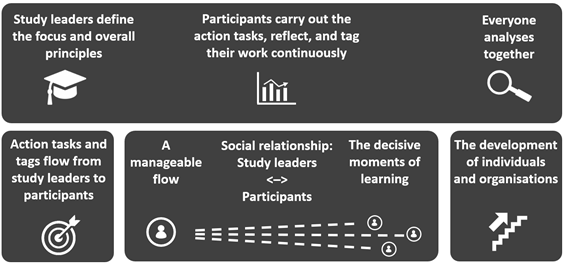
Figure 1.1. The three steps in DAS (revised from Lackéus, 2021, p.73)
Read more:
Lackéus, M. (2021) “Den vetenskapande läraren” [The Inquiring Teacher], chapter 4.
1.2 What DAS is used for and by whom
DAS is a way to transform everyday work into learning that can be analysed and acted upon. The method is used by leaders who want to make decisions based on more living evidence, by practitioners who want to develop in their work, and by organisations that want to build a culture where people learn collectively from small steps in everyday practice. Practical examples might include managers who want to get cross-functional collaboration moving, coaches supporting teams in change work, social services developing different service processes, and teachers who want to make school development or student learning more visible.
In all these examples, reflections in the moment become a way to see patterns that would otherwise remain invisible. The ability to combine short texts with tags and feelings means that both stories and numbers contribute. There’s an important democratic point here – the power of scientific methods doesn’t have to be reserved for researchers in academia. When many can participate in small experiments, read reflections together and decide on next steps, the strength of research methods moves closer to practice. Everyone gets to participate. See Table 1.2 which shows typical user groups.
Table 1.2. Some typical user groups for DAS.
| Students | Employees | Researchers |
| Wellbeing / health Conflict management Work experience in school Workplace practice Action-based pedagogy Vocational education / workplace learning Teacher education Learning in Work Entrepreneurship education Marketing | SWOT analysesStrategy work Coaching Motivational interviewing Project follow-up Practice development Support for research-informed work Professional development Quality work Learning organisation | Impact studies Follow-up research Attitude surveys Action research |
Read more:
Lackéus, M. (2025) “Designed Action Sampling: Investigating emotional action through micro-reflections”. Book chapter in development for anthology on research methodology
Lackéus, M. (2021) “Den vetenskapande läraren” [The Inquiring Teacher]. 10 different examples in vignette boxes throughout the book.
Lackéus, M. (2025). “I have All the Feelings”: Navigating the Emotional and Practical Challenges of Research Method Innovation in Entrepreneurship Education ECSB 3E, May 20-22, Munich.
1.3 A variety of completed DAS studies
DAS has emerged through real studies in many different settings, where each context has refined the methodology further. We will now look at some concrete examples. In a series of studies about a pedagogical idea called value creation pedagogy, researchers tested how emotionally charged action tasks for students affect their engagement and knowledge development. The many short reflections – a total of 11,000 reflections were collected – made nuances visible on a completely different scale than interviews can offer.
Researcher Jonas Boström’s work with the “shark study” – where the DAS methodology was likened to sensors being attached to “sharks”, in this case change leaders – became an example of how different attempts to introduce patient-centred care in healthcare can be more or less successful.
In Åstorp municipality in south Sweden, the education department has used DAS to follow and improve different parts of their practice, where they have published lessons about what moves practice forward. Uddevalla municipality has conducted large reading studies that showed how action tasks and feedback can drive both results and pride, something that was also recognised externally through a national quality award called “Guldtrappan”.
Development leaders in Hässleholm municipality developed practice-based systematic quality improvement work with a rhythm that holds over time. Researcher Leigh Morland followed café owners who tried new ways of working with composting. Preschool teachers in several municipalities have used DAS to collectively explore how their ways of relating to others and their leadership shape children’s sense of security and participation. Social workers have used DAS to systematically follow how changed working methods affect relationships, workload and professional judgement.
These examples show a great breadth in how DAS has been applied. At the same time, it’s the same simple structure that in all these cases makes it possible to understand cause and effect in living environments. See Figure 1.4 with three covers that highlight some of the studies.
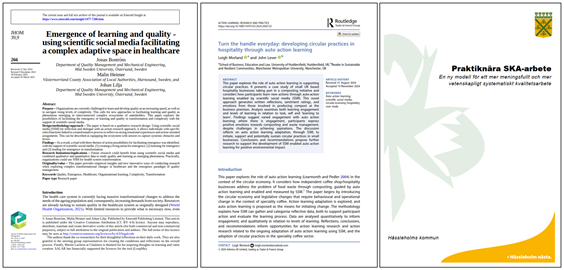
Figure 1.3. Three example studies using DAS methodology.
Read more:
Boström, J. (2025). Designing for Quality Emergence in Healthcare–Reflection and Action Mid Sweden University].
Boström, J., Heimer, M., & Lilja, J. (2025). Emergence of learning and quality-using scientific social media facilitating a complex adaptive space in healthcare. Journal of Health Organization and Management, 39(9), 266-283.
Brandt, P., & Viebke, H. (2023). Elever läser – en studie av lässatsning med hjälp av Skolverkets lärmodul [Pupils read – a study of reading initiatives using the National Agency for Education’s learning module].
Lackéus, M. (2020). Comparing the impact of three different experiential approaches to entrepreneurship in education. International Journal of Entrepreneurial Behavior & Research, 26(5), 937-971.
Lackéus, M. (2021) “Den vetenskapande läraren” [The Inquiring Teacher]. 10 different examples in vignette boxes throughout the book.
Magnusson, A., Lackéus, M., Ohlsson, K., & Holmén, P.-E. (2023). Praktiknära SKA-arbete: En ny modell för ett mer meningsfullt och mer vetenskapligt systematiskt kvalitetsarbete [Practice-based systematic quality work: A new model for more meaningful and more scientific systematic quality work]
Morland, L., & Lever, J. (2024). Turn the handle everyday: developing circular practices in hospitality through auto action learning. Action Learning: Research and Practice, 1-19.
Viebke, H. (2020). Vilken effekt kan programmeringsundervisning ha på elevers lärande enligt lärarna själva? En effektstudie av möjligheter och utmaningar med programmeringsundervisning [What effect can programming education have on pupils’ learning according to the teachers themselves? An impact study of opportunities and challenges with programming education].
1.4 What DAS achieves that otherwise isn’t possible
Many organisations recognise the sluggishness of traditional methods for following up and analysing practice. Surveys arrive late and often lack context. Interviews provide depth but are difficult to scale broadly. Observations require large amounts of time and are interpreted only afterwards. The analysis thus becomes heavy, results are few and far between and participants rarely experience that their contribution is made visible or makes a difference.
DAS tackles these limitations by moving data collection to the moment when something crucial actually happens and tying it to concrete actions that several people can try in parallel. Unlike many other methods, DAS doesn’t begin with metrics for follow-up, but with deliberately designed testable actions that are assumed to create value in practice. This gives participants more support in everyday work. Concrete actions are described, writing makes their thinking visible and comments deepen their understanding. For managers, it means an ongoing stream of micro-insights that can be translated into small, clear decisions without waiting for the next thick report that few read anyway. For organisations, it means a learning culture where shared patterns become clearer and where progress, obstacles and risks become shared phenomena, not individual burdens.
It’s this combination of pace, grounding and analysability that is missing in much other development and follow-up work. DAS makes it possible to try many small changes in parallel, which lowers risk and increases pace compared to more traditional development work. The gap between action and analysis closes, which means that writing doesn’t become dry documentation after the fact, but instead makes professional judgement visible. Instead of following up and evaluating people’s work retrospectively from a distance, we walk alongside practitioners throughout their development journey. We also get better impact from development efforts, impacts that also become more clearly visible. Analysis becomes a collective practice rather than an expert moment, which increases both ownership and usefulness in decision-making.
1.5 DAS as a bridge between theory and practice
Despite good access to research and general models, many professionals struggle to move between theoretical research-based knowledge (“scientific basis”) and changes that work well in a complex everyday reality (“proven experience”). At one end we have research’s abstract language and models, at the other end we have everyday work’s richly varied reality. Two separate worlds.
A useful methodological tradition here is the so-called design science research (DSR) tradition, which offers a middle step between theory and practice. This tradition recommends that we create design principles that can be tested and improved incrementally. This is precisely what we do with DAS. Design principles are made concrete in the form of action tasks and tags that are gathered in content packages and tested in so-called everyday inquiry – a recurring, practice-based study of one’s own practice. Design pioneer Herbert Simon, who laid the foundation for design research around 50 years ago, described this as the sciences of the artificial. When we prototype behaviours in real environments through DAS, we are thus engaged in design practice. DAS as a design practice then becomes a working way to bridge the gap between theory and practice through testing, reflection and analysis in real contexts, see Figure 1.5 below.
Another useful concept from design science research is the abbreviation CIMO which stands for Context, Intervention, Mechanisms and Outcome. We need to ask ourselves what should be done (Intervention) in which context (Context) to create which effects (Outcome) and why this is likely to work (Mechanisms). When many try similar action tasks in different contexts, comparability then emerges without losing local nuances. The analysis then gives not just a list of observations, but also suggestions for design principles that can be taken forward to other contexts.
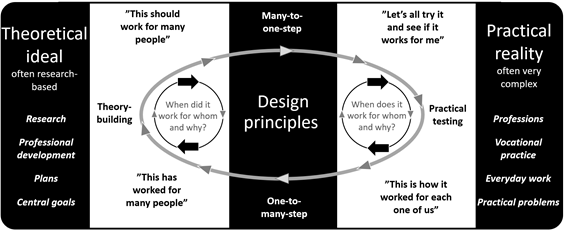
Figure 1.5. How design principles bridge between ideal and reality (figure revised from Lackéus, 2021, p.117).
Read more:
Denyer, D., Tranfield, D., & Van Aken, J. E. (2008). Developing design propositions through research synthesis. Organization Studies, 29(3), 393-413.
Lackéus, M. (2021). Den vetenskapande läraren [The Inquiring Teacher]. Chapter 6.
Romme, A. G. L., & Endenburg, G. (2006). Construction principles and design rules in the case of circular design. Organization Science, 17(2), 287-297.
Simon, H. A. (2019). The sciences of the artificial, 3rd edition reissued. MIT press.
1.6 DAS gives a finer-grained blend of learning with creating value for others
In many organisations, learning is separated from everyday value creation for others – customers, users, students or others that the practice exists for – despite the fact that it’s precisely in daily work that the most important learnings arise. What makes DAS particularly powerful is that the method gives us a finer-grained blend of one’s own learning (“learn”) with creating value for others (“work”). When people every week try something small, preferably new, that matters to someone else, and simultaneously reflect in writing on how it went and what insights were made, a balance emerges that many unfortunately otherwise lack in their work. We’ve previously lacked a term for this balance. I’ve chosen to call it having a good work–learn balance. It’s about what happens to us as people when learning isn’t separated from production, but is woven into the doing itself. With a good work-learn balance, motivation, competence and quality all increase. Work becomes more enjoyable when we more often see the small mechanisms that make a big difference in our attempts to help others.
Unfortunately, many organisations tend to be unbalanced from this perspective. Practitioners are expected to create value but rarely have time to learn in a structured way, or, learning activities are offered that aren’t connected to the actual everyday tasks of work. With DAS, these two threads are woven together in a reasonable rhythm. Small action tasks, short micro-reflection, collective sense-making and adjustment. In Figure 1.6 below, the idea of work–learn balance is shown. The figure illustrates why learning-oriented reflection in everyday work is a necessary part of work rather than a luxury we don’t have time for. In DAS, reflection in the moment isn’t a pause from work, but a deliberately designed part of how work should function.
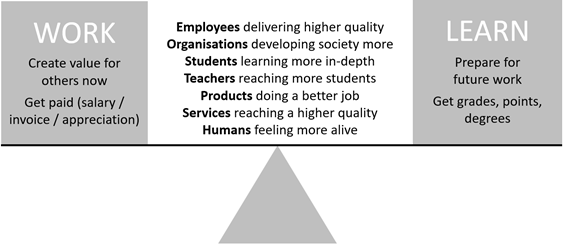
Figur 1.6. Everyday work-learn balance (revised from Lackéus, 2023).
Read more:
Lackéus, M. (2021). Den vetenskapande läraren [The Inquiring Teacher]. Chapters 3, 6 and 13.
Lackéus, M. (2022). Den värdeskapande eleven [The Value-Creating Student]. Chapter 5.
Lackéus, M. (2023). Work-learn balance – a new concept that could help bridge the divide between education and working life? Industry and Higher Education, 38(2), 177-190.
1.7 A golden middle way between numbers and text
Many practices fumble between on the one hand demands for measurability and follow-up, and on the other hand an everyday reality that is too complex to be captured in simple numbers. On one side are rigid surveys and metrics (“numbers”) that chase a general objective truth but often miss context and complexity. On the other side are personal experiences collected through oral subjective conversations via for example interviews and meeting minutes (“text”), but which rarely allow themselves to be spread or compared more broadly.
DAS contributes to organisational learning with precisely a method that binds together numbers with text – mathematically analysable statistics are combined with written-down wisdom from everyday work. This is grounded in the philosophy of science approach called critical realism. Critical realists argue that there are real mechanisms that affect what happens in practice, but that we can only understand them through incomplete observations in specific contexts. When we through DAS succeed in combining numbers and text, we more easily see such mechanisms, and then the analysis and thus the learning is strengthened. Without strong data, the analysis instead becomes weak, however rigorously it’s done. With garbage data we get garbage analysis, which we’ll see in Chapter 6.
DAS as a middle way is about letting those who are close to everyday reality lead the work of collecting both numbers and text. Study leaders get access to simple and clearly described procedures for designing action tasks, inviting reflection and leading collective analysis. Figure 1.7 shows a comparison between surveys, interviews and DAS, based on aspects such as philosophy of science, data collection method, governance, analysis and study methodology. However, DAS isn’t about replacing conversations and surveys, but about adding a method that unites different perspectives. We’ll return to this comparison at the end of Chapter 3.
Table 1.7. DAS is a promising middle way between rigid general truths and vague personal experiences.
| Dimension | Interviews | DAS | Surveys |
| Philosophy of science basis | Vague subjectivism | Critical realism | Rigid objectivism |
| Data collection method | Oral conversations | Digitally facilitated experience collection | Digital surveys and statistics |
| Analysis focus | Text | Text and numbers | Numbers |
| Governance model | Bottom-up ideas from individual practitioners | Learning leadership at middle level | Top-down governance |
| Study method | Description of socially constructed meaning | Active creation of events that reveal mechanisms | Passive observation of facts and regularities in numbers |
Read more:
Lackéus, M. (2021). Den vetenskapande läraren. [The Inquiring Teacher]. Chapter 1.
1.8 How to study everyday work in research-informed ways?
Throughout world history, scientific method has contributed to more sustainable improvements than any other way of working. No other method has contributed more to increased quality of life, health and safety. Since Francis Bacon’s time (1561–1626), we’ve experienced 400 years of scientific revolution. Yet it’s extremely rare that scientific logic permeates everyday organisations.
Traditional scientific work requires time, competence and structures that few practices outside academia have at their disposal in daily work. DAS was developed to remedy this and make scientific logic more “just right” – or “lagom” in Swedish, an untranslatable word. Rigorous enough to be reliable, but simple enough to work in a time-pressured everyday reality. We call this working in research-informed “lagom”-scientific ways, or inquiring into your everyday work – becoming an inquiring practitioner. We’ll return to conceptual questions in Chapter 10 where we go through well-known inquiring practitioners through time, from ancient Egypt onwards, and put words to who fundamentally is an inquiring practitioner.
Working in scientific ways is in practice less mysterious than many think, but it requires discipline. You start by formulating a testable hypothesis or inquiry question, based on a systematic approach that connects actions and observations. You then test it through experimentation in everyday work, document in ways that others can understand, relate pragmatically to what actually works in a given context, analyse with both openness and clear criteria, and continue persistently over time, in repeated cycles.
In DAS, this is translated into a way of working that people can sustain. Action tasks with clear intent, reflections directly after action, quick dialogue that deepens understanding, analysis that combines quantity with meaning, and decisions that are actually tested next week. This way, working in scientific ways doesn’t become something that happens far away or only in academia, but a language and rhythm that belong to the work itself. Figure 1.8 summarises these principles, and shows how six scientific principles support each other. When these principles are embedded in practice, everyday inquiry becomes easier to lead and the results clearer to use.
| Studying everyday work in research-informed ways means working… | |
| …hypothesis-based | How do we test whether the idea works in practice? |
| … systematically | Many practitioners test the same ideas simultaneously. |
| … documenting | All practitioners reflect deeply on outcomes. |
| … pragmatically | Does this work for me and my colleagues specifically? |
| … analytically | Look for patterns, similarities, differences, insights. |
| … persistently | Do more of what works, less of what doesn’t work.. |
Figure 1.8. Six principles for research-informed everyday inquiry.
Read more:
Lackéus, M., Sävetun, C., & Westlund, C. (2020). Lärares vetenskapliga lärande med IT‐stöd – vad, varför, hur? [Teachers’ scientific learning with IT support – what, why, how?]
Lackéus, M. (2021). Den vetenskapande läraren [The Inquiring Teacher]. Chapters 5-7.
1.9 IT support to make everyday inquiry feasible
It’s in steps two and three of DAS work that reality makes itself known. Capturing hundreds of short reflections precisely when something happens, connecting them to clear action tasks and tags, responding quickly as a study leader in a human tone, and simultaneously being able to analyse patterns in a fair way is practically impossible with email threads, anonymous survey forms or shared documents on a common file server.
This is why we developed a special IT support for working in scientific ways in everyday practice, a kind of “Scientific Social Media” (SSM) that we call Loopme (see www.loopme.se). An SSM platform does three things at once: it lowers the threshold to act and reflect through simple prompts and mobile access, it preserves the confidential dialogue between study leaders and participants so that the quality of the material grows, and it provides analysis views that bind together the depth of stories with the overview of numbers. In practice, this means that action tasks and tags can be designed as content packages, that reflections come in at the moment with feeling ratings, that reminders are sent at the right time, and that comments keep the rhythm alive. When the material is then to be analysed, there are overviews, heat maps (overviews that show where much or little is happening) and quote clusters (groups of recurring formulations) that make it possible to see cause and effect without losing context.
It’s certainly possible to try DAS without an SSM support like Loopme. Many have done so. What we often hear, however, is that surveys lack the relational feedback and that shared documents quickly become unmanageable. Loopme doesn’t solve everything, but it makes it easier to work in scientific ways – practically, traceably and ethically manageable, with clear frameworks for anonymisation and access. Figure 1.9 below shows what the flow looks like from digital reflection on action tasks to collective analysis, and illustrates why a unified digital support tool facilitates work with DAS on a larger scale.
Read more:
Lackéus, M., Sävetun, C., & Westlund, C. (2020). Lärares vetenskapliga lärande med IT‐stöd – vad, varför, hur? [Teachers’ scientific learning with IT support – what, why, how?]
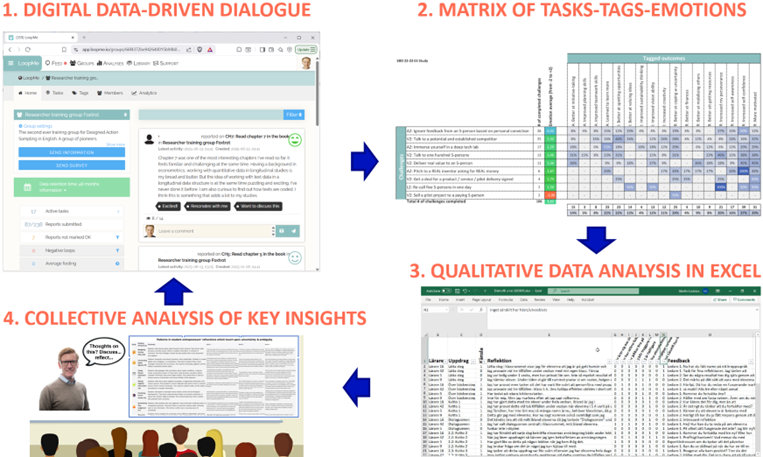
Figure 1.9. Four-step model for how DAS works together with Scientific Social Media platform such as Loopme.

